A well-designed office should speak to your visitors before they even say hello. Strategic wayfinding signage design Ballarat workplaces require is no longer just about sticking arrows on a wall. It's the silent thread that connects your brand identity to the physical experience of your space.
You've likely felt the frustration when a client arrives flustered after getting lost in a complex building. Perhaps your current interior feels generic and lacks the soul of your brand culture. We agree that a confusing or soulless environment is a missed opportunity for connection. This article shows you how to bridge that gap. You'll learn how to plan a clearer visitor journey and include accessibility requirements in your signage brief.
This guide covers practical considerations for Ballarat office signage, from maps and typography to materials, digital support and accessibility.
• Understand how Ballarat's mix of heritage architecture and modern industrial hubs requires a tailored, strategic approach to office navigation.
• Set a clear information hierarchy so visitors can identify the next step at a glance.
• Explore how materials and typography can support navigation without competing with the directions.
• Learn how to conduct a professional wayfinding signage design Ballarat audit to identify visitor pain points and map a seamless journey from entry to exit.
• Use environmental graphics to connect your brand with the workplace while keeping routes clear.
Ballarat offices range from converted heritage buildings to contemporary fit-outs. Older layouts can have multiple entries, uneven routes and narrow corridors. Newer workplaces can be just as difficult to navigate if entrances, reception and shared spaces aren’t clearly marked.
Effective wayfinding signage design serves as your silent concierge. It bridges the gap between Ballarat's historic building envelopes and the high-tech interior fit-outs of 2026. When navigation is poor, the costs are hidden but heavy. Frustrated visitors lose trust before they even reach your boardroom. Staff lose productivity helping lost couriers. The concept of wayfinding is about more than just arrows; it's about spatial problem-solving that empowers every person who enters your space. It's an investment in clarity and brand confidence.
Implementing wayfinding signage design ballarat requires a deep respect for our local architectural DNA. Many CBD offices occupy multi-level heritage buildings. These structures are rich in character but often light on logical flow. We believe in creating a sense of place that feels uniquely Ballarat. This means using materials and typography that honour the past while providing the clarity of a world-class headquarters. It's about making sure your modern brand doesn't feel like an intruder in a historic setting. We focus on elevating the experience through strategic alignment and purposeful design.
Start the journey at the places visitors actually arrive: street, car park, accessible entrance and lift. Check whether a first-time visitor can recognise the correct entrance and find reception without needing a staff member to direct them.
Wayfinding is a language. It is a strategic system that communicates through architecture, graphics, and space. We don't just see it as a collection of signs. We see it as the psychology of movement. When executing wayfinding signage design ballarat, our goal is to eliminate the cognitive friction that occurs in unfamiliar environments. People shouldn't have to think about where they're going. They should just feel the path. Navigation is a fundamental human need. When we satisfy it, we build trust.
By weaving office branding solutions into the fabric of your building, we create a journey that feels intentional. It's a delicate balance. You need high-impact visuals that tell your brand story, but they must never compromise functional clarity. We believe that a space should be as beautiful as it is usable. This is the intersection of art and science. It's where your brand identity becomes a physical experience that guides and empowers everyone who enters.
We use the principle of progressive disclosure. This means giving your visitors exactly the information they need at the precise moment they need it. Too much data creates clutter. Too little creates anxiety. We distinguish between three core categories: directional signs that guide, identificational signs that label, and informational signs that explain. By applying consistent wayfinding design principles, we use colour coding and bespoke typography to build an intuitive mental map for every user. This methodical approach ensures that even the most complex multi-level centre feels manageable.
Environmental Graphic Design (EGD) moves navigation beyond the standard door plaque. We treat walls, floors, and glass partitions as canvases for communication. Our graphic design Ballarat team uses scale to create architectural impact. Large-format graphics can act as landmarks, helping people orient themselves in large, open-plan offices. We also focus on texture. Premium materials like brushed metals, layered acrylics, or sustainable timbers add a tactile dimension to the brand experience. This level of wayfinding signage design ballarat professionals expect turns a simple hallway into a branded environment. If your current workspace feels fragmented, it might be time to look at your brand strategy through a spatial lens.
Office graphics can borrow from the colours and materials of the interior, but the signs still need to be legible and consistent. Keep essential directions separate from decoration.
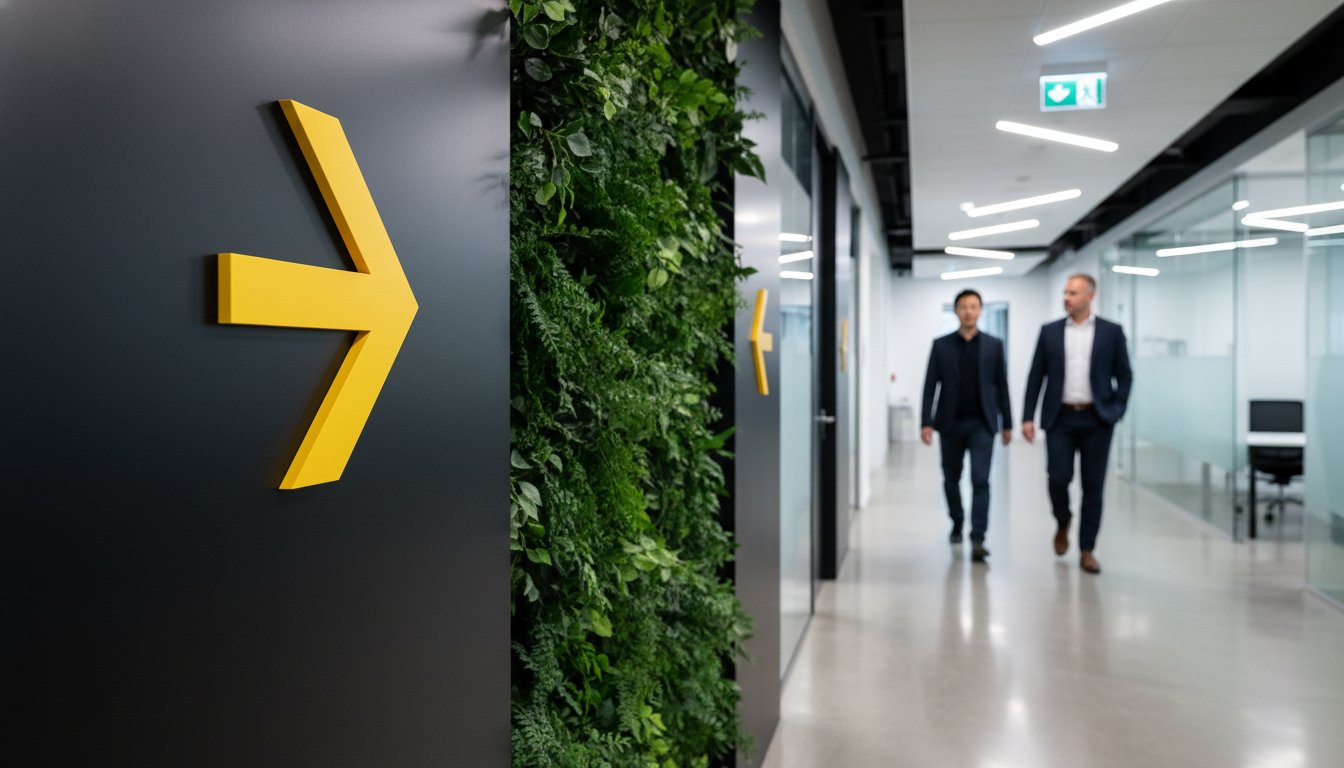
Natural materials and textures can complement an interior. Use simple type and clear contrast for the sign itself, and test it against any patterned background at the intended viewing distance.
Consider a range of visitors when choosing wording, contrast, lighting and symbols. For workplaces where teams and rooms move frequently, modular inserts or signs can make updates easier without replacing the full system.
QR codes can add useful detail such as a map, current room information or a translated guide. Treat the code as a supplement rather than the only way to find an essential destination.
When choosing materials, compare expected wear, cleaning and repair, along with cost and installation. If local sourcing or recycled content matters to the brief, ask suppliers to document the origin and material specifications.
Strategy is the foundation of every successful environment. Before we pick up a pencil, we must understand the logic of your space. We start with the "why" behind every movement. A successful wayfinding signage design ballarat project doesn't just happen. It's the result of a meticulous planning process that looks at your office through the eyes of a complete stranger. We identify where people hesitate. We find the gaps in the narrative of your building. This strategic alignment ensures your office works as a cohesive, high-performing tool.
Mapping the user journey is a holistic exercise. It begins at the street level and ends in the boardroom. Every decision point along that path is an opportunity to reinforce your brand. We consider the psychological state of your visitor at each step. Are they rushed? Are they anxious? By providing clear, sequential information, we remove the friction of navigation. This builds immediate trust. It shows that you value their time and their experience within your headquarters.
Confirm applicable signage requirements with the project’s building surveyor or access consultant. Use a sign schedule to identify the locations where braille, tactile information, contrast or mounting requirements apply. For exterior signage design, check exposure to weather and light with the fabricator before choosing materials and finishes.
Walk the key routes with first-time visitors or people unfamiliar with the building. Note where they hesitate, miss a turn or need to retrace their steps. Review the sign locations with the architect, interior designer and other project specialists so the proposed directions work with the layout.
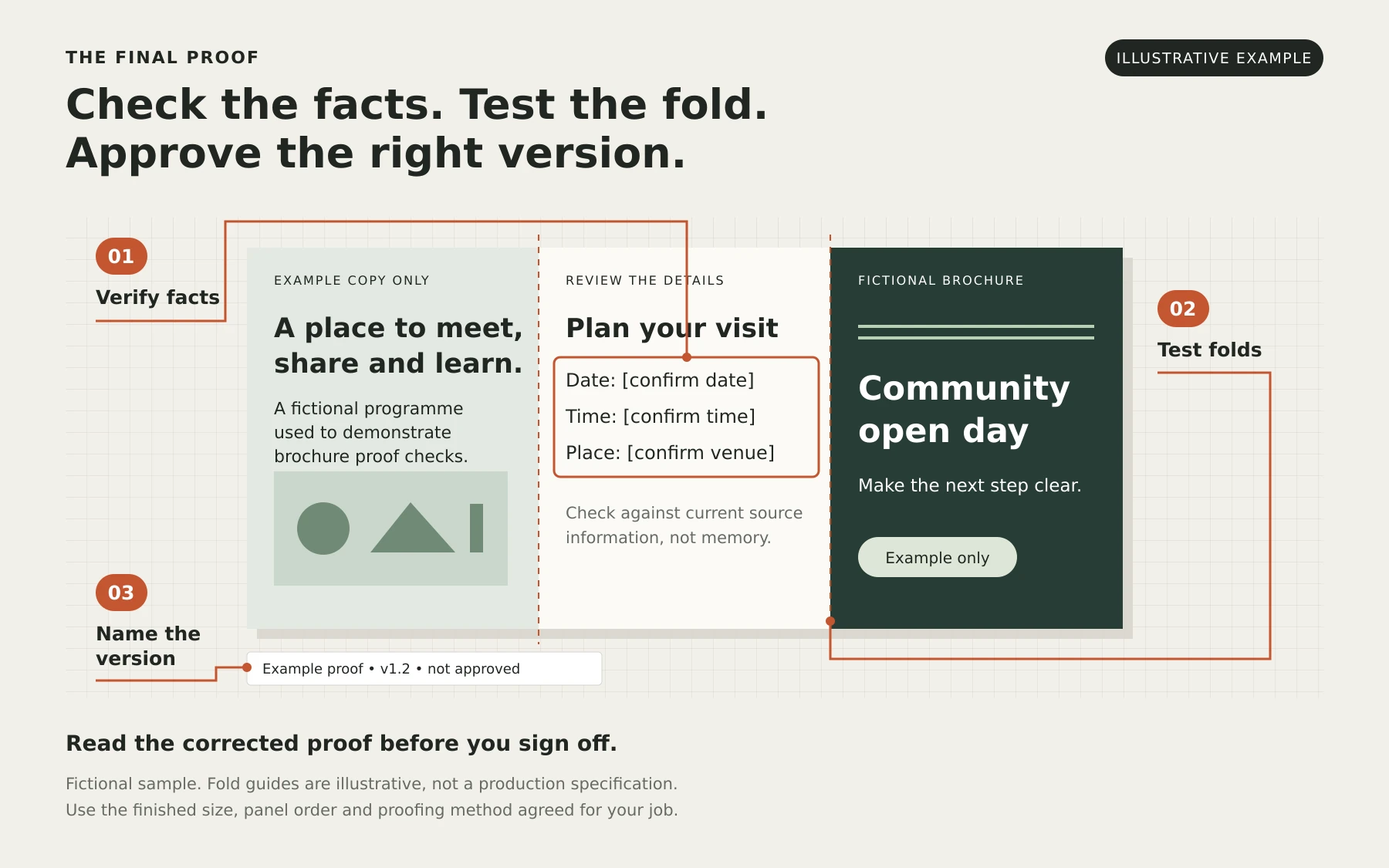
Test a full-size prototype at the actual viewing distance and under site lighting. Check legibility, sight lines, glare and finishes. Confirm responsibility for fabrication, installation and final site inspection before approving environmental graphics and signage.
Experience defines our approach. We've spent over two decades refining the art of visual communication. Our team brings Melbourne sophistication to Ballarat's most ambitious brands. We don't just execute tasks. We act as your strategic partner. Choosing the right expert for wayfinding signage design ballarat is about more than finding a supplier. It's about finding a guide who understands the transformative potential of your environment. We bridge the gap between where you are and where you want to be.
We build connections. Every project is a collaboration focused on your success. Our bespoke solutions ensure your graphics reflect your unique brand values. We don't believe in generic templates. We believe in tailor-made systems that empower your team and impress your clients. From the first strategic discovery to the final site installation, we provide a seamless, end-to-end service. It's a methodical yet energetic flow that respects your time and delivers results.
We work with organisations in Ballarat on brand-led design for physical spaces. A good brief distinguishes the navigation problem you want to solve from the visual finish you want to achieve.
If you are planning a workplace fit-out, bring floor plans, expected visitor routes and details of any existing signs to the first discussion. Confirm who will review access requirements and who will fabricate and install the signs. Elevate your Ballarat office with Seamer Design's expert wayfinding solutions.
Your workspace is a silent brand ambassador. It should empower every visitor. We've explored how biophilic elements and inclusive design standards are reshaping our local offices. These aren't just trends. They are essential tools for growth. Strategic wayfinding signage design ballarat ensures your environment speaks clearly and acts purposefully. It's about more than navigation; it's about building a culture of clarity and confidence.
Seamer Design brings over 20 years of design excellence to every partnership. We are a boutique agency with deep local Ballarat expertise. Our approach is always brand-first. We don't just decorate walls; we build strategic connections between your physical space and your digital identity. We're ready to help you bridge the gap between your current office and a visionary future. Every word and material we choose is intentional, ensuring your space works as hard as you do.
Book a strategic wayfinding consultation for your Ballarat office today. Let's transform your environment into a high-performing asset that champions your success and welcomes your clients with open arms.
Wayfinding is a strategic problem-solving process that guides people through complex environments using spatial cues. Putting up signs is merely the execution phase. We look at the user journey to identify decision points and eliminate confusion. It's about the psychology of movement. A well-designed system feels intuitive and invisible. It ensures your visitors feel empowered from the moment they enter.
Every project is unique and requires a tailored approach based on your specific office layout and brand goals. We don't provide flat rates because the scope varies significantly between a single-level boutique office and a multi-storey heritage headquarters. Factors like material selection, the number of decision points, and custom fabrication requirements all influence the final investment. We focus on delivering high-performing assets that provide long-term value.
Requirements depend on the building, sign location and applicable approval framework. Confirm the adopted NCC edition, relevant standards and any applicable variations with the building surveyor or access consultant before finalising the sign schedule.
Often, yes. Updated room signs, directory panels or wall graphics can be considered separately from structural work. Check existing surfaces, installation constraints and any required building or landlord approvals.
Timing depends on the number of locations, site access, approvals, production lead times and installation. Ask for a programme with separate milestones for site review, design, prototype or proof approval, fabrication and installation.
Match the material to the installation site, cleaning routine, expected wear and the way it will be fixed. Metal, acrylic and timber can all be useful in the right setting. Ask the fabricator about samples, finishes and replacement options before committing.
Use brand colours as accents or to identify zones, then pair them with text, icons or numbering so colour is not the only cue. Check contrast and legibility in the intended lighting and confirm any required specifications with the project’s access consultant.
Both interior and exterior signs can be considered in a wayfinding brief. Describe the full route from street or car park to reception or meeting room, then confirm which signs and project responsibilities are included in the agreed scope.